
Health and Safety Policy — House Clearance Northolt
This Health and Safety Policy sets out the standards, responsibilities and procedures for safe working by our house clearance and rubbish removal teams. It applies to every member of staff and contractors engaged in domestic and commercial clearance work across our service area. The purpose of this policy is to reduce risk, protect staff, clients and the public, and ensure that rubbish collection, junk removal and clearance services are carried out in a controlled, compliant manner.
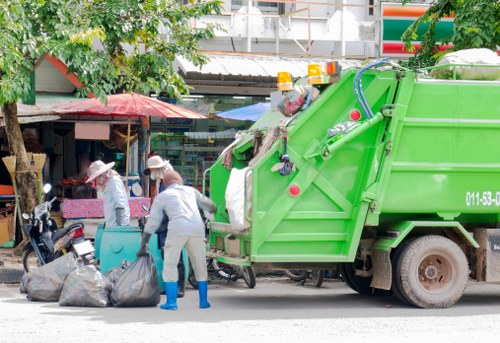 Our approach emphasises continuous risk assessment, clear reporting lines and practical controls. All persons employed in clearance activities, including casual labour and subcontractors, must follow safe systems of work, use provided protective equipment and attend mandatory training. House clearance operations often involve manual handling, waste segregation, potential contamination and use of vehicles, so disciplined procedures are essential.
Responsibilities and Organisation
Management will ensure the policy is implemented by allocating responsibility for health and safety, providing resources for training and personal protective equipment (PPE), and by monitoring performance. Site operatives are expected to follow instructions, report hazards, and participate in toolbox talks. Supervisors must perform pre-job briefings, confirm risk assessments are completed and ensure all staff are competent to perform allocated tasks.
 A designated safety officer will maintain documentation, investigate incidents and lead reviews after any significant event. Records of training, vehicle checks and waste disposal paperwork will be retained and reviewed periodically. This structure supports consistent and verifiable compliance with statutory requirements and industry best practice for clearance and rubbish services.
Risk Assessment and Control Measures
All clearance jobs will have documented risk assessments covering manual handling hazards, sharps, hazardous substances, asbestos risks where suspected, biological contamination and traffic management during vehicle loading. Controls include, but are not limited to:
- Safe manual handling techniques and mechanical aids for heavy items;
- Use of gloves, eye protection, high-visibility clothing and respiratory protection when required;
- Segregation and correct containment of waste streams for recycling, hazardous items and general rubbish;
- Vehicle loading procedures to prevent shifting loads and secure waste during transit.
These measures are applied according to the scale and nature of each job, and are reviewed when circumstances change or new hazards are identified. Contractors providing specialised removal services must present permits, licences and method statements before work begins.
Training and Competence
All employees involved in clearance work receive induction training covering hazard recognition, manual handling, PPE use and vehicle safety. Refresher training is provided periodically. Supervisors will receive additional instruction in risk assessment, incident investigation and safe loading techniques for bulky waste. Apprentices and temporary staff will not be allowed to work unsupervised until competency is demonstrated.
Records of training and qualifications are maintained for audit purposes. Where specialist risks arise, such as potential asbestos-containing materials or chemical contaminants, only suitably qualified personnel will manage the task, and external specialists will be engaged where required.
Incident Reporting and Emergency Procedures
All incidents, including near-misses, must be reported immediately through the organisation’s reporting system. Investigation will identify root causes and corrective actions to prevent recurrence. First aid provisions are maintained in vehicles and at regular depots, and designated first-aiders are available during working hours.
Emergency procedures include evacuation plans for property clearances, spill containment and safe isolation of hazardous items. In the event of a serious injury or dangerous occurrence, statutory reporting to relevant authorities will be completed without delay, following legal obligations for safety-critical services.
Vehicle, Equipment and Environmental Controls
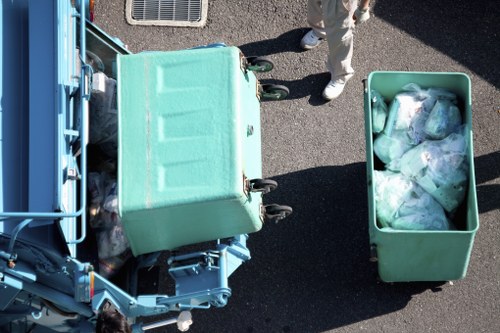
Vehicles and equipment are subject to routine inspections and maintenance schedules. Drivers and loaders will carry out pre-shift checks, and any defects will be reported and rectified before use. Environmental controls include measures to minimise dust, control run-off from loaded materials and ensure lawful disposal at licensed facilities. Waste transfer notes and disposal documentation must accompany loads where required.
 Performance monitoring and periodic audits will measure compliance with this policy. Continuous improvement is pursued through feedback from staff, lessons learned from incidents and changes in regulation. The policy is reviewed annually or more frequently if significant changes in operations or legislation occur.
Policy Review and Commitment
This policy demonstrates a commitment to the health and safety of employees, clients and members of the public when delivering house clearance, rubbish removal and junk collection services. It outlines responsibilities, controls and procedures designed to reduce harm and ensure professional, lawful operation of clearance activities across our service area.
All personnel are expected to read, understand and act in accordance with this policy. Management will provide the necessary resources to meet the policy objectives and will maintain transparent records to demonstrate compliance. Adherence to this policy is a condition of employment and a cornerstone of safe, reliable rubbish and clearance operations.